
Regular cancer screening helps find cancer early, often before you notice any symptoms and when treatment is most effective. We support all NHS cancer screening programmes at Kensington Partnership – including for breast, cervical and bowel cancer.
Cancer screening saves lives and early detection is key, many people feel worried or unsure about screening. Below you will find information about our different screening programmes, who’s invited and where to get help or advice if you have any concerns.
Want to know more about cancer screenings or have worries and concerns? Click the button below to email our dedicated email address where our cancer champions will answer your queries about cancer screenings.
Click on the dropdowns below to learn more about different cancer screenings
Cervical Cancer
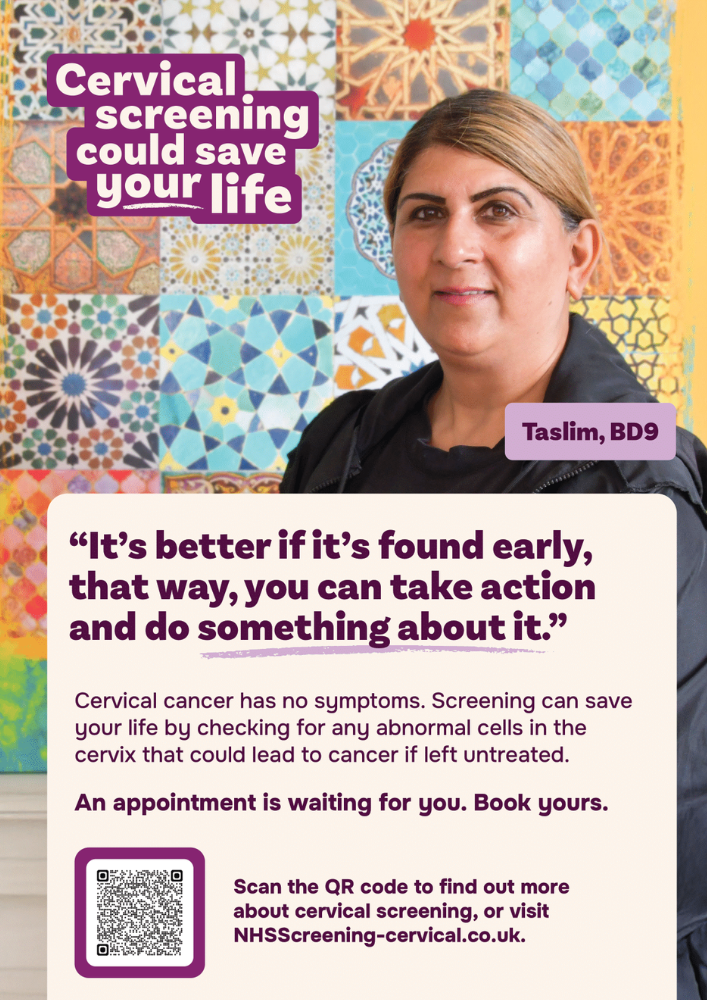
Cervical screening isn’t just a one-off test, attending your regular screenings is essential.
HPV changes can develop over time, what might have been fine at your last screening 5 years ago might have changed into something needing more investigation. Early detection is only possible with cervical screening.
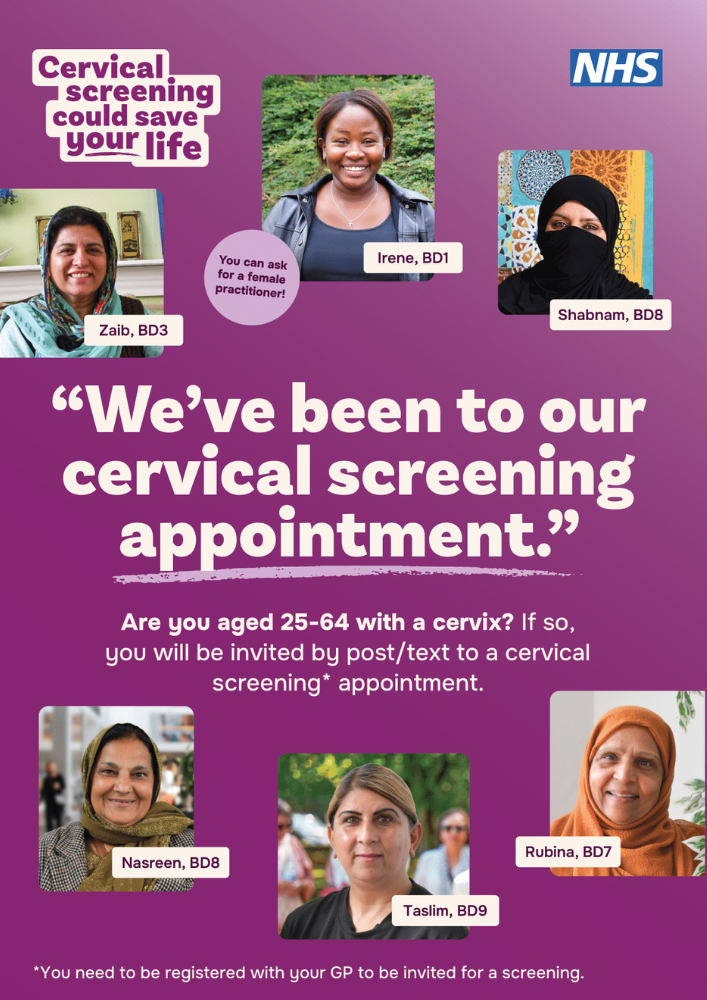
Cervical screening (also known as a smear test) is a test to check the health of the cervix and help prevent cervical cancer. It is offered to women aged 25 to 64 every 5 years.
During cervical screening, a small sample of cells is taken from the cervix (the opening to the womb). The sample is then tested for high-risk types of HPV that can cause cell changes.
When will I have my cervical screening?
All women aged between 25 and 64 will be invited every 5 years. You’ll get your first invite a few months before you turn 25.
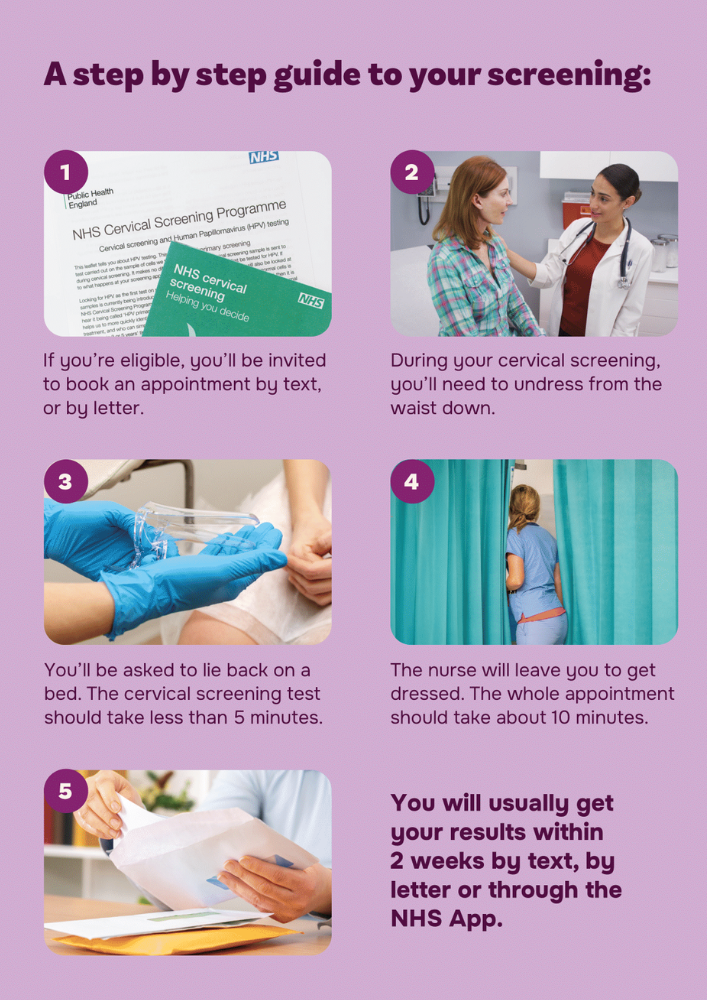
We will send you a text message inviting you to book your test.
If you were invited for cervical screening but missed or did not book an appointment, ring the practice – even if you were invited months ago
How will I find my results?
You’ll get a letter from the NHS telling you your test results.
If no high-risk types of HPV are found, no further tests are needed. If it is found, the cells are checked for any changes so they can be treated early to help prevent cervical cancer.
How can I make my cervical screening easier?
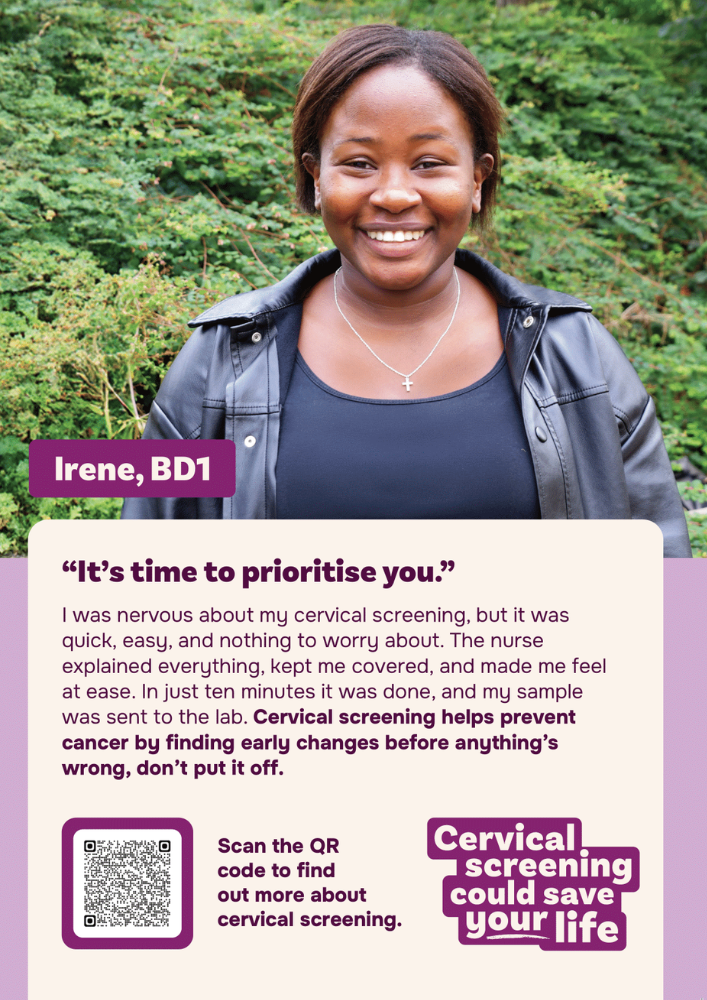
Lots of women do different things to make their cervical screening easier. Most women find it slightly uncomfortable but the test itself takes less than 5 minutes to complete.
You can bring a friend if you like, wear something you can leave on during the test (like a skirt or long jumper), breathing exercises can help you relax or try bringing something to listen to or read.
You can ask your nurse for a smaller speculum or to lie in a different position also – you can also ask to stop the test at any time.
What to expect at my cervical screening
- You’ll be asked to undress from the waist down behind a screen and cover yourself with a sheet. The nurse will be waiting on the other side of the screen.
- The nurse will ask you to lie back on the bed, usually with your legs bent, feet together and knees apart.
- You’ll be behind a screen and covered with a sheet at all times
- The nurse will gently insert a speculum into your vagina to look at your cervix. They might use a small amount of lubricant.
- The nurse will open the speculum so they can see your cervix, and take a small cell sample with a soft brush
- The nurse will close and remove the speculum, and you can get dressed.
What if I am on my period?
Try to book for when you are not on your period, menstrual blood can interfere with the sample which might mean you need to have the test again.
If you think you are due your period when your test is due, let us know and we can reschedule
What if I’ve had my HPV vaccine?
It is still important to come for your screening.
The HPV vaccine protects against cancers caused by HPV like cervical cancer, but a small number of cervical cancers aren’t caused by HPV.
Other risk factors like smoking or family history can increase your chance of cervical cancer.
What if I’m not sexually active or haven’t had sex?
You should still attend your cervical screening.
‘Having sex’ means different things to different people. You can still get HPV from any form of sexual contact.
Even if you have never had any sexual contact, there is still a low risk of cervical cancer.
What if I’m pregnant?
You will not usually need to have cervical screening if you’re pregnant or could be pregnant until at least 12 weeks after you’ve given birth. Pregnancy can make it harder to get clear results.
If you received your invitation whilst you are pregnant, please get in touch with us at the practice and we can delay your test.
If you’ve previously had an abnormal result from a cervical screening test, you might need to be screened whilst you’re pregnant – your GP or midwife will confirm this.
The test is still safe to carry out whilst pregnant.
What if I’ve had a hysterectomy?
It depends on the type of hysterectomy you’ve had, the reasons for the operation and the results of any tissue samples taken.
There are different types of hysterectomy and sometimes the cervix is left in place.
Please get in touch with us and we can confirm if your cervix was removed as part of your hysterectomy.
If you had your hysterectomy abroad, you will need to provide evidence or documentation of what type of hysterectomy you had. You may need to be re-examined to check if your cervix was removed.
Watch: Cervical screening: how it’s done
Bowel Cancer
Early detection is the best form of prevention. Regular bowel screening can detect early changes long before symptoms appear, meaning treatment is a lot more effective and preventing bowel cancer from developing.
Bowel cancer screening is a test you do at home (called a FIT Test) to check for signs of bowel cancer.
The FIT test involves you taking a very small sample of your poo – this is then tested to check if it contains blood. Having blood in your poo may be a sign of bowel cancer.
The NHS offers screening to find signs of bowel cancer at an early stage when there are no symptoms, this is when treatment can be most effective.
Sometimes cells in the bowel grow too quickly and form a clump known as a bowel polyp. Polyps aren’t cancers but can develop into cancer over time, finding polyps means they can be removed.
When will I have my bowel cancer screening?
Everyone aged between 50 and 74 will receive a bowel cancer screening home test (FIT test) every 2 years. You will receive your FIT test when you are an even year age (50, 52, 54 years old etc).
If you have lost or discarded your FIT test, please contact the free bowel cancer screening helpline on 0800 707 6060.
If you’re worried about symptoms of bowel cancer please get in touch with your doctor – even if you’ve recently had your screening.
You can also get screening for bowel cancer every 2 years if you’re over 75, but you will need to call the free bowel cancer screening helpline on 0800 707 6060
How will I find my results?
You’ll get a letter from the NHS telling you your test results.
If you don’t have your results within 2 weeks, call the free bowel cancer screening helpline on 0800 707 6060.
What if my result says: No Further Tests Needed
You don’t need to do anything else. If you are aged between 50 and 74 you’ll be offered the test again in 2 years time.
Even if bowel cancer screening shows you do not need further tests, it does not always mean you do not have bowel cancer. It is still important to know the symptoms of bowel cancer and speak to your GP if you have symptoms you’re worried about.
What if my result says: Further Tests Needed
This means blood was found in your poo and needs to be investigated.
You’ll be invited to an appointment with a specialist nurse who will talk with you about your results and what happens next. You’ll usually need to have a colonoscopy, where a camera is used to check inside your bowel.
Blood in your poo doesn’t always mean bowel cancer – there are more common and less serious reasons why blood might be in your poo, such as an anal fissure or bowel polyps.
Watch: Using your bowel cancer screening kit


Do I need to change my diet before the FIT test?
No. Eat and drink normally.
What if I’m on my period?
If there’s any chance period blood might get into the sample, wait until your period finishes then complete the FIT test.
What if I’ve had diarrhoea recently, or if my poo is loose/watery?
You can still do the test, just take a small amount of the more solid part if possible.
If you feel it won’t be a good sample, give it a day or two and try when things settle.
I received my FIT test a while back, can I still use it?
Maybe. Check the expiry date on the test.
If the test has expired, call the free bowel cancer screening helpline on 0800 707 6060
Breast Cancer
Early detection is the best form of prevention. Keeping up with routine breast screening is vital, as it can spot tiny changes you might not be able to feel yourself, giving the best chance of early diagnosis and successful treatment.
Regular breast screening can find breast cancer before you notice any symptoms. X-rays called mammograms check your breast for cancer – it can help find cancer early when it’s more treatable.
Even if you have no symptoms or can’t feel anything when examining yourself it’s still important to attend your breast screening.
Breast screening is carried out by a mammographer who will be female, they’ll explain what will happen during the screening and answer any questions you might have. The mammogram will only take a few minutes and should take no longer than 30 minutes for the whole appointment.
Anyone can get breast cancer, you should check your breasts or chest regularly to learn what feels and looks normal for you. You should check your breasts or chest about once a month.
How to self-check your breasts
Symptoms to look and feel for when checking your breasts:
- A lump or swelling in your breast, chest or armpit
- A change in the skin of your breast, such as dimpling (like an orange peel) or redness
- A change in size or shape of 1 or both breasts – it’s common for breasts to be different sizes, but check for any changes which aren’t normal for you
- Nipple discharge if you’re not pregnant or breastfeeding, which might have blood in it
- A change in the shape or look of your nipple, such as it turning inwards (inverted nipple) or a rash on it (it might look like eczema)
Your breasts might naturally look and feel different at different points in your menstrual cycle, if you’re pregnant or breastfeeding or after menopause.
The CoppaFeel Self-Checkout guides you on how to check your breasts and learn about the signs of breast cancer.
Watch: How to check your breasts or chest
- Look at your breasts in a mirror to look for any changes, start with your arms by your sides then raise them
- Feel around each breast in a circular motion all the way up to your collarbone and under each armpit
- Use a mix of light and firmer pressure. Do not press so hard it hurts
- Feel around and over each nipple
CoppaFeel also offer a monthly text message reminder service, reminding you each month to check your breasts
If you have a lump or swelling, any abnormal changes or pain that doesn’t go away in your breast, chest or armpit please get in touch with your GP.
When will I have my breast screening?
All women will receive their first breast screening invitation aged between 50 and 53, then you’ll be invited every 3 years after that until your 71st birthday. You will receive a letter through the post inviting you to book.
If you were not invited for breast screening by the age of 53 and think you should have, contact Pennine Breast Screening on 01274 365521.
If you’re worried about symptoms of breast cancer please get in touch with your doctor – even if you’ve recently had your breast screening.
If you’re over 71 years old you won’t be automatically invited, but you can you still have your breast screening every 3 years. You will need to contact Pennine Breast Screening on 01274 365521.
What to expect at my breast screening
- The female mammographer will check your details and ask if you have any breast problems
- You’ll undress, in private, above your waist
- The female mammographer will help place one breast into the right position on the X-ray machine (this means they will need to touch your breast)
- Your breast will be squeezed between 2 pieces of plastic to keep it still, then she will take the first X-ray
- Breast screening can be a little bit uncomfortable for some people but any discomfort shouldn’t last long.
- The female mammographer will move the machine and take a second X-ray on the same breast
- Your other breast will be X-rayed the same way
- You’ll be able to get dressed in private
- If you are in a wheelchair or have mobility issues, please let them know when arriving as they will be able to make reasonable adjustments
How can I make my breast screening easier?
The mammographer will always be female and are trained to help you feel more comfortable and can provide support.
You can wear a top that’s easy to take off (rather than a dress or jumpsuit), let the staff know if you have difficulty walking or standing so they can make you feel more comfortable. You can also bring a family member or friend with you to help you feel more relaxed.
Don’t wear deodorant, antiperspirant or talcum powder on the day as this may affect the mammogram. Let them know if you have breast implants, a pacemaker or are pregnant.
How will I find my results?
You’ll be sent a letter with the results of your breast screening (mammogram) usually within 2 weeks of your appointment.
Sometimes you might need to have another mammogram to get a clearer picture of your breasts before you get your results.
It can sometimes take longer to receive your results. It does not mean anything is wrong, you can call the breast screening service for updates.
What if my result says: No sign of breast cancer
You don’t need to do anything else. You will be invited again for your screening in 3 years time.
Even if your breast screening shows no signs of breast cancer, it’s still important to check your breasts and see your GP if you notice any changes.
What if my result says: Further tests needed
Your results might say you need further testing. You will be given an appointment for that. The further tests can include an examination of your breast, more mammograms, ultrasound scans or taking a small sample (biopsy) from your breast.
Most people who need further tests will not be diagnosed with breast cancer. But if there are signs of breast cancer, finding it early might mean it’s easier to treat.
You might feel anxious about having further tests, your letter will tell you how to contact a breast care nurse if you have any questions or want to talk about the process.
Watch: What happens at your breast screening appointment
What if I have very small/very large breasts?
Everyone can have a mammogram. The equipment and staff are trained to work with all breast sizes.
What if I’m on my period or my breasts feel sore?
You can still attend your breast screening if you’re on your period.
If your breasts are sore or tender you might feel more discomfort. You can rebook if you prefer to – just contact Pennine Breast Screening on 01274 365521.
What if I have breast implants?
You can still attend your breast screening, just let the staff know – they’ll still be able to get a clear image safely.
What if I’ve had a mastectomy?
If you have had surgery to remove just one breast, you will still be invited for your breast screening.
Double mastectomy patients will not be invited for breast screening.
What if I’m pregnant or breastfeeding?
Let the screening team know. Routine screening is usually postponed after breastfeeding unless your doctor advises otherwise.
What if I have a pacemaker?
You can still attend your breast screening – just tell the mammographer so they can position you safely.


